Mathematical Thinking
Creating a Culture of Mathematical Thinking: Learning Beyond the Classroom
At our school, we are excited to share the incredible work our teachers are doing to deepen mathematical learning and engagement. This year, our focus has been on building strong math routines, expanding math vocabulary, and broadening the use of instructional materials to create rich, meaningful experiences for students.
Strengthening Math Routines
Teachers are intentionally incorporating routines that promote reasoning, problem-solving, and collaboration. These routines help students develop confidence and persistence, while encouraging them to explore multiple strategies and perspectives in problem solving.
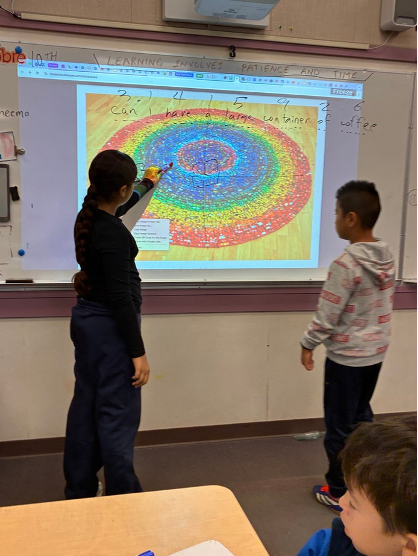
Expanding Math Vocabulary
Language is a powerful tool in mathematics. Our educators are prioritizing vocabulary to help students articulate their thinking. By embedding math language into learning (whether it’s during math time or not), students learn to communicate ideas more effectively and engage in deeper mathematical discussions.
Broadening Materials and Approaches
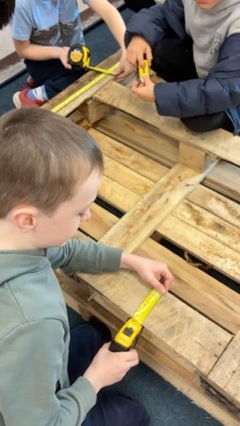
We’ve seen teachers embrace a variety of resources (manipulatives, visual models, and real-world contexts) to make math more accessible and engaging. This flexibility allows students to connect abstract concepts to tangible experiences. In one class, several students were asking, “Is this math, or science?” This blurred understanding is where learning comes to life. Students begin to recognize the cross-pollination that occurs when teaching and learning are done holistically.
Engaging Math Bulletins
Our hallways are alive with math! Staff have created vibrant bulletin boards that showcase problem-solving challenges, and and thought-provoking questions. Even our students have contributed, adding their own creative spin to the math displays by creating number riddles (grab a pen and try to solve one!).
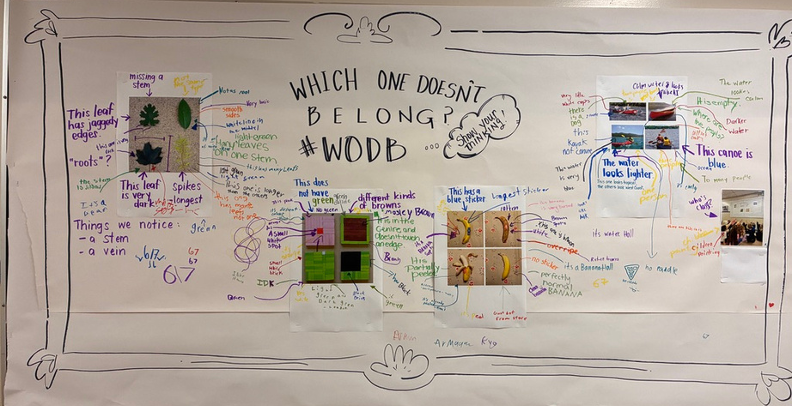
These visual celebrations of math spark curiosity in all members of the community and invite mathematical thinking beyond the classroom.
Leaning Into the Conversation
One of the most exciting shifts is seeing teachers grow comfortable with not always providing or knowing the answers. Some practices encourage educators to even start with the answer, so time is spent on the many ways of solving for and approaching problems. Instead, our community is leaning into the learning that happens during conversations, listening, reasoning, and questioning when we create spaces that foster a culture where math thinking matters more than the speed of an answer.
Professional Learning in Action
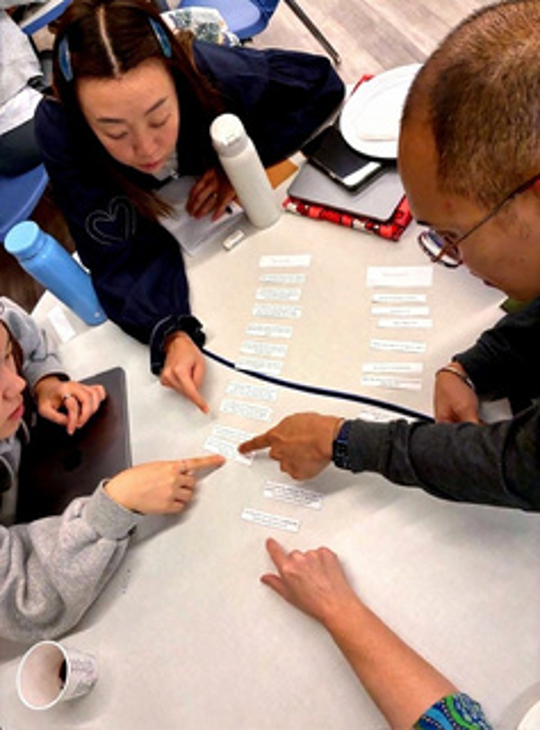
The learning doesn’t stop at the classroom door. In the staffroom, discussions can be heard as teachers share ideas, strategies, and reflections on making math instruction meaningful.
Updated:
Tuesday, December 2, 2025